
The Science Behind Stainless Steel Welding Wire in Food-grade Manufacturing
Introduction
When it comes to making food grade products, cleanliness, accuracy, and adherence to safety standards are top priorities. All machinery must comply with stringent safety and sanitation requirements in order to produce safe foods and beverages. One important, often overlooked detail in this procedure is the usage of ลวดเชื่อมสแตนเลส (stainless steel welding wire-https://www.udo.co.th/product/detail/yawata-308l-16). This is an essential material that contributes not only to the structural strength, but also the necessary level of hygiene food processing plants demand. Knowing the science behind the use of it shows why stainless steel welding wire is the best selection to be used around food.
Why Stainless Steel Remains a Food-Grade Standard
Like other sectors, stainless steel has been the material of choice for the food industry for its resistance to corrosion, ease of cleaning and ability to keep a sterile surface. But the base material is not the only thing that is critical, since the welding process must also satisfy these same demanding standards. This is where ลวดเชื่อมสแตนเลส comes into play. The welding wire used is required to be compatible with the parent stainless steel to maintain its surface properties and to prevent contamination, particularly in equipment such as tanks, piping systems, and processing surfaces.
The Effect of Welding Wire on Sanitation
People who need to join stainless steel in food-related applications have learned the hard way that welding and food aren’t as compatible as they might have thought — or wanted. Stainless welding wire requires matching the base metal composition — it cannot meet the exact chemical composition of stainless without becoming stainless. Any deviation can lead to a welded connection that, as time passes, turns into a rust, mildew, or chemical hotspot.
Stainless Steel weld wire is formulated to provide excellent characteristics after post-weld annealing. This is crucial in environments such as food grade where the smallest crevice could contain bacteria. Additionally, sulfides and phosphides can not be present in the wire, and the wire must contain special alloying elements in correct proportions–typically chromium and nickel–so that the weld will possess high purity and durability.
Major Graded Beds and Their Geobiological Significance
Multiple grades of stainless steel welding wire are available in the food and beverage industry with an overall similar chemical and mechanical feature:
- ER308L: One of the most popular grades, particularly for welding 304 stainless steel. It has high resistance to corrosion and is both heat and rust resistant.
- ER316L: Well suited for corrosive environments and to the use of acid foods in marine food processing. The additional molybdenum increases resistance to pitting and crevice corrosion in acidic / chloride en…
- ER347: It has stabilizers such as columbium (niobium), which is suitable for high-temperature applications and resists intergranular corrosion.
The selection of the best ลวดเชื่อมสแตนเลส to use to weld any parent material together is based on the material and conditions the welded material will be exposed to after the welding job.
Welding Techniques for Sanitary Results
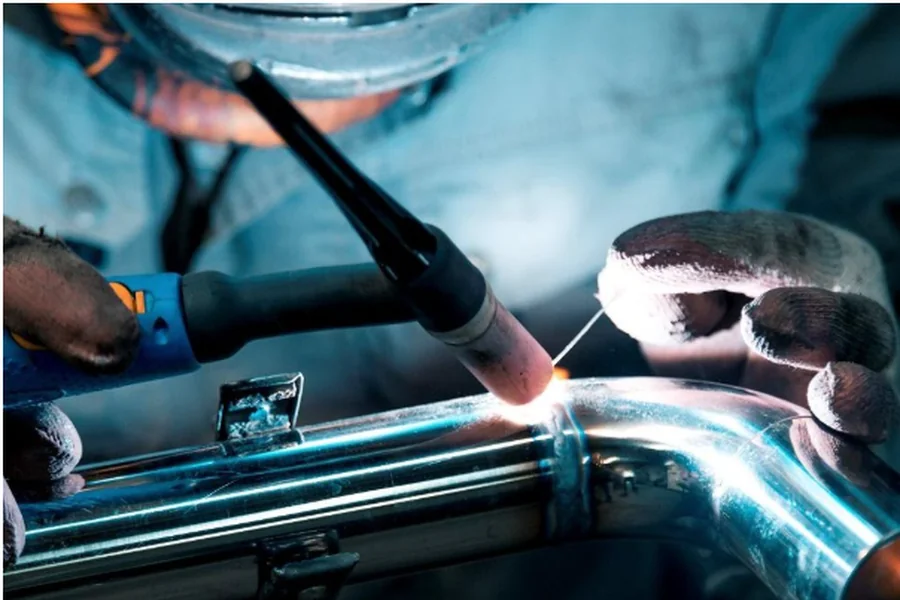
The quality of the wire, although important, is not the only factor that makes a CC wire, the welding processes being also as important. TIG (Tungsten Inert Gas) welding is used in food-grade applications because of its accuracy and neaten finish. TIG will give better heat control and spatter is much reduced resulting in a cleaner finish that is easy to clean.
The science goes beyond the wire itself to the shielding gases employed in welding. It is common to use pure argon or helium-argon mixtures to avoid oxidation and to retain the integrity of stainless steel. In addition, post-weld finishing treatments, such as passivation, provide a means of reestablishing the chromium-rich oxide layer, thereby increasing corrosion resistance.
Compliance and Certification
Food-grade producers need to follow standards issued by organizations like the FDA, NSF, and ISO. These standards frequently call out what stainless steel grades and types of welding methods are appropriate. To meet those standards, fabricators must use certified * ลวดเชื่อมสแตนเลส * that have been tested to qualify the overall chemistry, mechanical properties and corrosion resistance.
The welds would need NDT such as dye penetrant testing or radiography to be checked for cracks or inclusion. And a breakdown in any part of the weld could compromise the cleanliness of an entire food production line.
Conclusion:
Similar is the case with ลวดเชื่อมสแตนเลส in food-grade production where science, engineering, and safety combine to provide a safe environment for manufacturing of food. We took control of every step including chemical composition, welding method and regulation compliance so there is no weak point in the welded joint of food processing equipment.
The “power elite” consumers are now expecting transparency and safety in fresh food production, so manufacturers should still invest in the quality of materials and labor. With a basic education in the science behind stainless steel welding wire-https://www.udo.co.th/product/detail/yawata-308l-16, businesses may make better choices that support both productivity and the highest level of cleanliness.
When you are in the business of food production, choosing the best ลวดเชื่อมสแตนเลส is more than a strictly technical consideration; rather, it is a statement of dedication to quality and to the health and well-being of customers.


