
Innovations in General Aviation Tools: Enhancing Pilot Efficiency and Safety
General aviation (GAV) tools are instrumental in uniting isolated areas. They provide training and facilitate time-efficient, personal, and business travel. Tools employed by maintenance crews and pilots are increasing in number due to the evolution of technology. These innovations are not just making aviation safer. They also make it more efficient and accessible.
Improving Pilot Efficiency
Among the main objectives of general aviation is increasing the efficiency of pilots. Innovations such as electronic flight bags (EFBs) haven’t just replaced the paper charts. They have replaced manuals, too, that were previously used. EFBs enable the pilot to receive the latest information at the touch of a button. Therefore, this doesn’t just save time. It also ensures the appropriate data is provided.
Enhancing Safety with Aircraft Avionics Tools
Innovation in general aviation tools is another area where flight safety is greatly enhanced. These tools are essential because they offer pilots important information. With this information, pilots can stay aware of the aircraft’s performance and environment. Avionics provide easy alerts about different system conditions, including engine and battery performance. This allows pilots to identify possible issues early and take necessary steps to correct them before small problems become major threats.
Streamlining Maintenance with New Tools
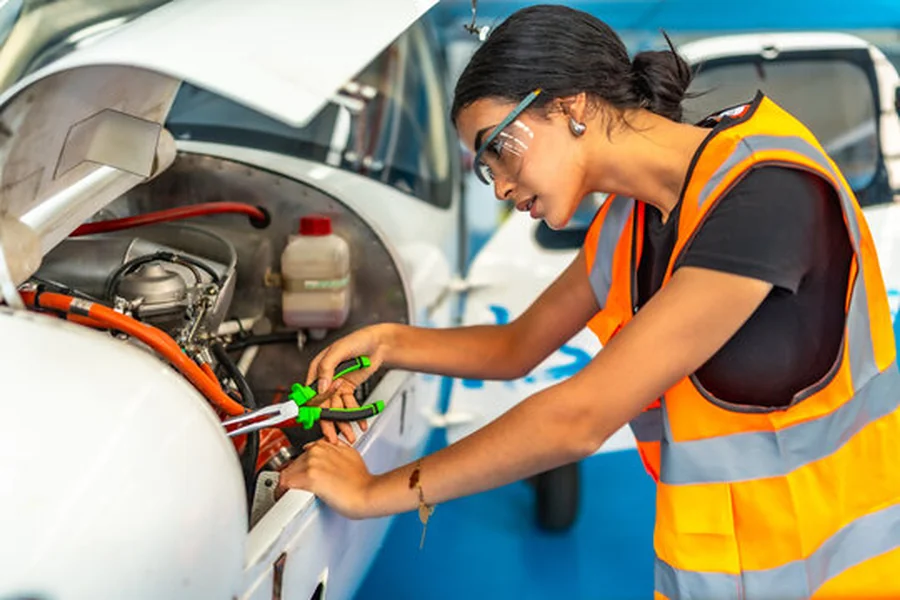
Newcomer innovations in general aviation tools greatly assist maintenance crews. Diagnostic instruments have utilized modern equipment to measure aircraft health in a more precise and shorter period. Devices such as handheld diagnostic units directly interface with an aircraft’s systems. This enables technicians to conduct in-depth checks within a fraction of the time it would have taken to be done traditionally. This minimizes the aircraft downtime and guarantees less time the aircraft are held ready to take off.
Tools That Improve Overall Flight Experience
Even the experience during flights has been improved with the emerging use of sophisticated aviation devices. The safety of cabin and cockpit designs has become ergonomic, and the physical load during long flights has been reduced. Seating, noise reduction, and climate control innovations make long journeys more comfortable, greatly benefiting both passengers and crew.
To the flight crews, the wise development of communication devices would enable clearer and more reliable communication with air traffic control and other significant parties. This ensures that coordination is in place during the flight, further improving safety and efficiency.
Key Innovations
These are the main innovations that you have to know:
- Electronic flight bags (EFBs)
- Flight planning software
- Handheld diagnostic units
- Issue-based maintenance predictors
In conclusion, general aviation tools are offering revolutionary changes. These changes don’t just enhance the way pilots fly their planes. They also enable the maintenance crew to keep them on course for optimal operation. Emphasizing the enhancement of efficiency, safety, and the overall flight experience is important. It truly makes air travel safer and more reliable than ever before.
With the ongoing technological advancements, new and extraordinary technologies continue to emerge. This, in turn, improves the aviation industry. These innovations benefit not only the pilots and maintenance crews. They also contribute to a safer and more efficient aviation experience for all parties involved.