The Vital Role of Roof Trusses in Modern Construction – and Why They’re Essential for House Extensions
When it comes to the structural framework of a building, few components are as important or as cleverly engineered as the roof truss. Acting as the skeleton of a roof, trusses provide the strength, stability, and geometry required to support the roof covering, distribute loads evenly, and maintain the integrity of the overall structure.
Roof trusses are a staple feature across all types of construction — from large commercial buildings to small residential extensions — and their design and material choice have a direct impact on both performance and cost efficiency.
In this article, we’ll explore the vital role played by roof trusses in construction and, with expert guidance from the team at Minera Roof Trusses, we’ll take a closer look at the types most commonly used. We’ll also examine why timber remains the preferred material for most truss systems.
What Is a Roof Truss?
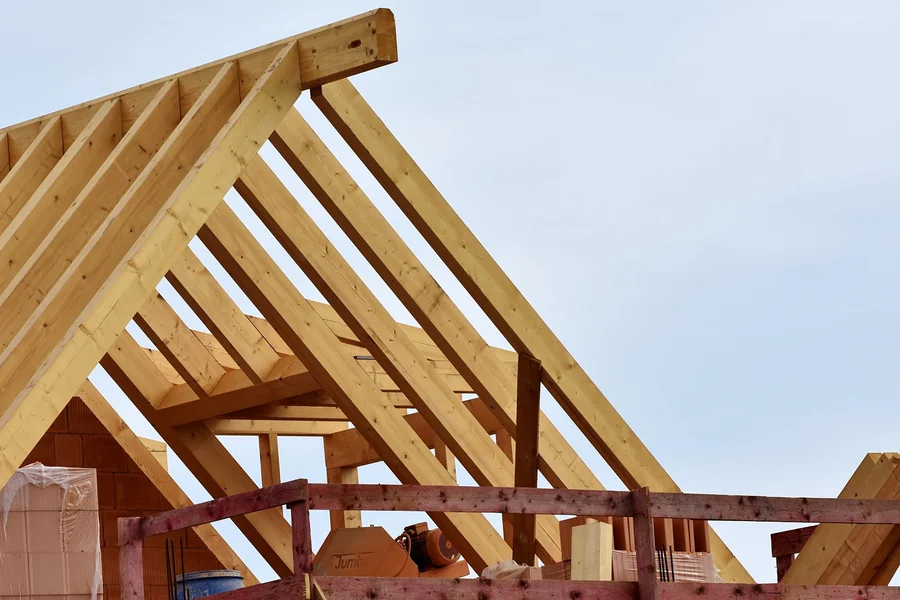
A roof truss is a structural framework, typically made from interconnected timber members, that forms the shape of a roof. Designed to transfer the weight of the roof and any applied loads (such as snow, wind, or maintenance weight) down to the supporting walls, trusses allow for efficient use of materials while maintaining excellent strength and rigidity.
Unlike traditional cut roofs — which are built piece by piece on site — prefabricated trusses are precision-engineered off site to specific design parameters and then installed as complete units. This makes them faster to install, more consistent in quality, and often more cost-effective.
The Role of Roof Trusses in Construction
In general construction, roof trusses are essential for:
- Load distribution: They evenly spread the weight of the roof structure across supporting walls.
- Design flexibility: Trusses can be manufactured to suit almost any roof shape or span.
- Structural stability: The triangular form provides natural rigidity and resistance to deformation.
- Speed of installation: Prefabricated trusses can be fitted quickly, reducing labour time and on-site disruption.
- Cost efficiency: By optimising material use, trusses deliver excellent performance without unnecessary weight or expense.
Using Roof Trusses in a House Extension
When adding an extension to a property — whether it’s a single-storey kitchen addition, a loft conversion, or an extra bedroom — roof trusses are a key consideration.
For extensions, prefabricated timber trusses are particularly valuable because they can be designed to match the roof pitch and profile of the existing structure. This ensures seamless integration between old and new sections, both structurally and aesthetically.
Commonly, house extensions will use fink trusses or mono trusses, depending on whether the roof is pitched on one or both sides. In some cases, attic trusses may be used to create additional usable space within the roof structure itself — perfect for adding a home office or guest room above an extension.
Common Types of Roof Truss Designs and Their Applications
There are many variations of roof truss, but the following are among the most widely used in both new builds and extensions:
- Fink Truss
The most common truss type, the fink truss has a distinctive ‘W’ shape webbing inside the triangular frame.
- Best for: Standard domestic roofs with moderate spans (up to around 8 metres).
- Benefits: Efficient use of materials, good load-carrying capacity, and straightforward installation.
- Typical use: New homes and single-storey extensions.
- Mono Truss
A mono truss features a single sloping side, forming a right-angled triangle rather than a symmetrical peak.
- Best for: Lean-to extensions, garages, and where the new roof needs to connect to an existing wall.
- Benefits: Allows easy drainage and can align neatly with existing rooflines.
- Typical use: Rear or side house extensions.
- Attic Truss
Also known as a room-in-the-roof truss, this design creates an open space within the truss framework.
- Best for: Conversions or extensions where additional living space is required.
- Benefits: Provides usable floor area within the roof void without the need for additional support beams.
- Typical use: Loft conversions or extensions with habitable upper floors.
- Raised Tie Truss
The bottom chord (tie beam) of this truss is raised above the wall plate, allowing for greater ceiling height or a vaulted ceiling effect.
- Best for: Living spaces that benefit from a more open, airy interior.
- Benefits: Aesthetic appeal and improved headroom.
- Typical use: Garden rooms, conservatories, or open-plan extensions.
- Scissor Truss
Similar to the raised tie design but with crossed internal members that form an internal vaulted ceiling line.
- Best for: Creating dramatic, high-ceiling interiors without compromising structural stability.
- Benefits: Combines visual impact with effective load transfer.
- Typical use: Extensions or homes with feature ceilings.
Why Timber Is the Material of Choice for Roof Trusses
While steel and composite materials can also be used, timber remains the most popular material for roof trusses in the UK — and for good reason.
Key characteristics of timber that make it ideal for trusses include:
- High strength-to-weight ratio: Timber offers exceptional load-bearing capacity without excessive weight, reducing stress on walls and foundations.
- Flexibility and resilience: It can absorb vibrations and minor movements in the building without cracking or failing.
- Ease of fabrication: Timber can be cut, joined, and prefabricated with precision using modern machinery.
- Sustainability: Responsibly sourced timber is a renewable material, aligning with sustainable construction practices.
- Thermal performance: Timber has natural insulating properties, helping to reduce heat loss through the roof structure.
- Aesthetic appeal: Exposed timber trusses can add warmth and character to interior spaces.
In short, timber offers the perfect blend of performance, practicality, and environmental responsibility — qualities that make it indispensable in modern roof construction.
Final Thoughts
Roof trusses play a crucial role in every aspect of building design and performance. Whether it’s a large-scale commercial structure or a modest home extension, the right truss system ensures that the roof is not only structurally sound but also efficient and visually cohesive.
For homeowners planning an extension, investing in high-quality, well-designed timber trusses is a decision that will pay dividends in strength, energy efficiency, and long-term durability.