
Top KPIs Every CFO Dashboard Must Include for Effective Decision-Making
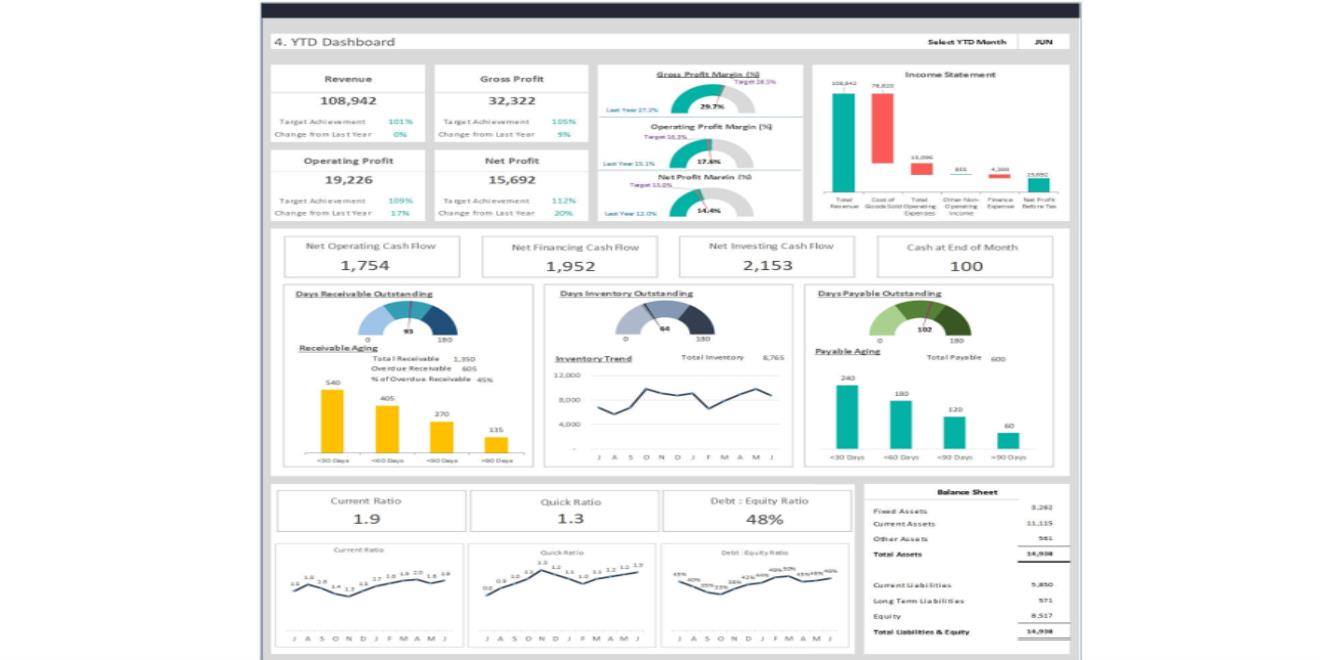
In the data focused business world of todays times Chief Financial Officers (CFO s) have transcended their traditional role as mere financial analysts to become strategic visionaries. The CFO Dashboard functions, as their hub providing an overview of the financial standing of a company. By integrating performance metrics into a visual interface CFO s can promptly make well informed choices pinpoint emerging patterns and actively address potential risks. Finance teams run the risk of missing insights that could affect cash flow and profitability well as long term strategy without a thorough dashboard, in place.
KPI plays a role in shaping financial decisions for CFO a well-crafted set of KPI helps CFO to interpret financial data effectively and make informed decisions it acts as a compass guiding them in assessing performance, against objectives spotting growth opportunities and meeting financial goals bridging the gap, between finance and strategy empowering CFO to steer the business confidently
Essential Financial Metrics for a Chief Financial Officers Dashboard.
Revenue and Revenue Growth Revenue serves as the indicator influencing business success and performance evaluation strategy in an organization’s operations cycle analysis scene module. Monitoring the revenue stream across different time periods segmented by product lineups or geographical zones offers insights, for CFO decision makers to gauge areas of business prosperity and identify potential areas requiring fine tuning adjustments in terms of operational strategies or resource allocations. Moreover, conducting an analysis, between revenue growth rates and predefined performance milestones delivers intel on prevailing market dynamics, customer tendencies and the efficacy of sales methodologies employed by the organization to secure sustainable business growth momentum.
Net Profit Percentage
The gross profit margin indicates how effectively a company creates its products or services by dividing the profit (revenue minus cost of goods sold) by revenue. Tracking this performance indicator (KPI) over time provides insights, into cost management efficiency and relationships with suppliers well as pricing strategies. A decreasing gross margin could suggest increasing production expenses or the necessity to reevaluate agreements, with suppliers. For further insights on managing production costs, consider exploring teleotp for valuable strategies.
Profit generated from operations and EBITDA.
Operating profit and EBITDA (Earnings Before Interest and Taxes, along with Depreciation and Amortization) serve as indicators of profitability by excluding nonoperational costs from consideration. It offers a view of the cash flow produced through day, to day functions. CFOs leverage these metrics to evaluate the company’s capacity to support expansion endeavors pay off debts. Steer through ups and downs.
Let’s look at the profit margin.
A company’s net profit margin is an indicator of its profitability since it considers all expenses and taxes, in relation to revenue when calculated as income divided by revenue. It serves as a measure for assessing performance and making dividend choices while also offering a way to compare with competitors, in the industry.
Comparing Budget to Results
It is essential for financial discipline to compare outcomes with planned numbers accurately. A CFO can effectively address variations. Adjust by using a dashboard that shows differences, in revenue expenses and profit categories. Knowing the reasons, behind variances. Whether they are caused by market situations, price alterations or unforeseen costs. Helps improve predictions.
Key Performance Indicators (KPIs) used for monitoring and control.
Cash flow is, like the heartbeat of any company or business entity—an indicator of health and sustainability. A comprehensive dashboard ought to display cash flow predictions detailing anticipated money coming in and going out in both the distant future. By leveraging this data financial officers can strategize effectively for costs optimize the allocation of resources and maintain ample liquidity to cater to operational requirements.
Selecting the Appropriate Graphics, for Financial Key Performance Indicators.
Visual representations play a role, in making intricate data easier to understand and interpret efficiently. Bar and column charts are ideal for comparing revenue and expenses side by side. For tracking trends over timeline charts are the way to go. When it comes to showcasing performance indicators such, as revenue, EBITDA and variance percentages KPI cards are the go-to choice. Waterfall charts come in handy when illustrating the factors influencing profit margins while heatmaps can effectively pinpoint areas of either underwhelming performance level.
Enhancing Engagement for a Deeper Understanding
Having a dashboard that doesn’t change much can hinder an understanding of the data it presents. To enhance user experience and data exploration capabilities consider adding elements such, as slicers, filters and drill down options. These features enable users to delve into the data based on time periods, departments or regions. For instance, Chief Financial Officers could simply click on revenue figures to see how its distributed across product lines and even identify key customers driving the revenue. By incorporating interactivity, a static dashboard can evolve from a report to a tool that aids decision making processes.
In summary.
The correct key performance indicators offer an understanding of how a company’s performing financially from all angles. Keeping an eye on measures such, as revenue growth rate and profitability margins allows CFO to gather insights for guiding the company in the right direction strategically. These performance indicators do not uncover risks and opportunities but also ensure that financial strategies remain in line, with the overall business objectives. Bizinfograph offers ready-to-use dashboard templates on Finance, Sales, HR and Manufacturing.